


How To Paint A Freehand Checkerboard Wall
I’m going to tell you something that might sound backwards: the key to a great checkerboard wall is NOT perfect lines.
The slightly wobbly lines feel intentional and hand-drawn instead of rigid and sterile. And it’s way less stressful than trying to make everything perfect.
This tutorial walks you through the whole process– from measuring to painting– so you can create your own perfectly imperfect checkerboard wall.
Tour the roomSupplies You’ll Need
You just need a few supplies for this project! Definitely plan to have a laser level on hand to make sure you get the lines straight. You’ll make them a bit wobbly when you paint them by hand, but you do want everything nicely laid out beforehand.
A Note On Paint
We used the 750ml cans of Farrow & Ball paint in the Dead Flat finish. I typically use Modern Emulsion for walls, but I was only needed the smaller can size (750ml) and they didn’t have all of the colors available in that finish. It looks great!

5 Steps To A Freehand Checkerboard Wall
Step 1
Measure & Plan
While a freehand wall may seem loosey goosey, getting it right requires a bit of planning. The first step is to figure out your square size and placement.
Measure Your Wall
Start by measuring the full width and height of your wall. This will help you decide on the size of your squares.
For example, our wall was about 171 inches wide, which perfectly broke into 19 columns of 9-inch squares. While you can choose a smaller square size, remember that it means more painting and measuring.
If your wall doesn’t divide evenly, don’t worry– this freehand style is very forgiving! You can simply make a column on either side a bit narrower to make it work.
The same goes for height– if your wall height doesn’t divide evenly, you may need to make the top or bottom row slightly shorter.
Start With Your Doorway (If You Have One)
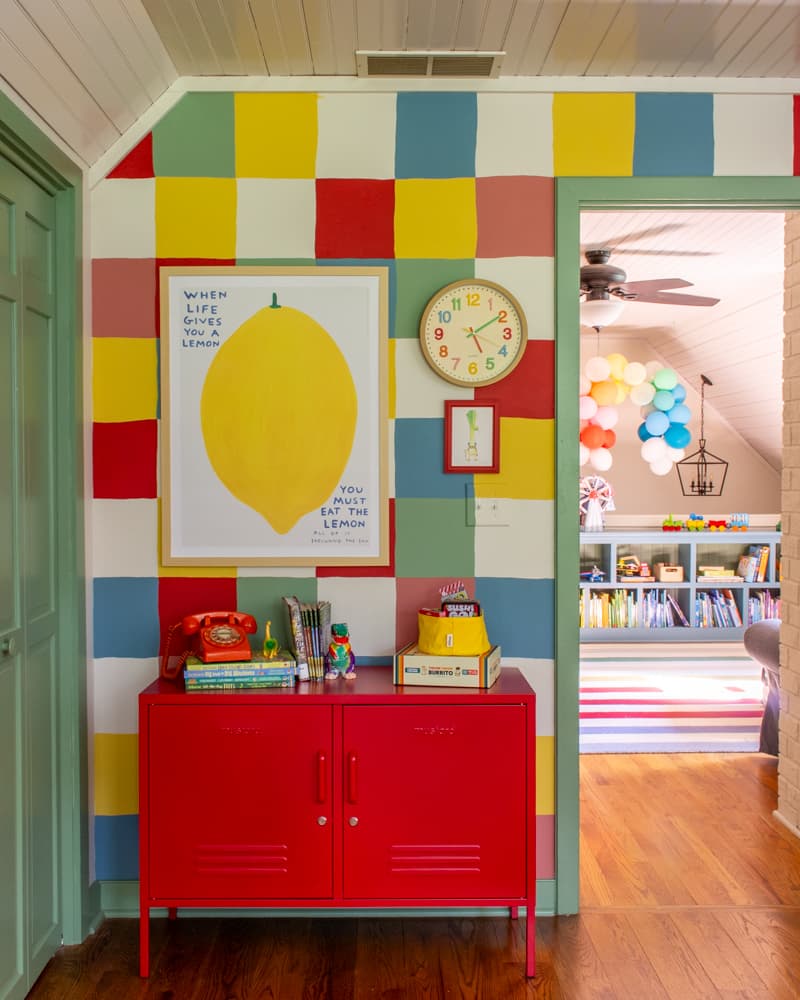
Here’s a trick that made our wall so much easier: we used the doorway as our starting point.
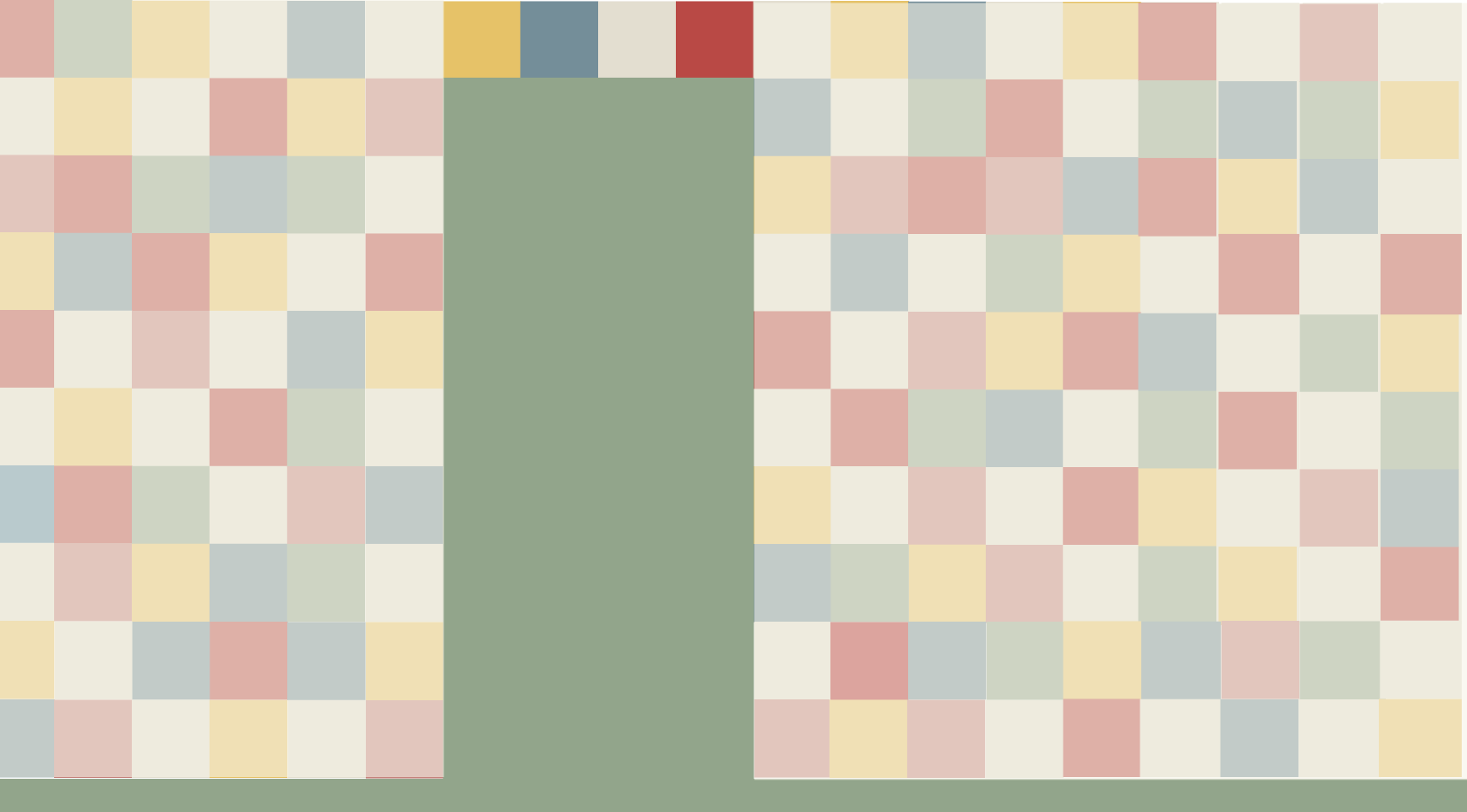
Our standard 36-inch doorway divided perfectly into four 9-inch squares. We started the design above the doorway, which ensured the squares on either side of the door aligned perfectly. Then we grew the design from there, with each side of the door having a full column of squares that continued onto the walls on either side.
You’ll see in the image below how we broke the area above the doorway into four squares first, then continued this pattern across the wall.
Pro tip: If you have a doorway, archway, or window on your wall, use it as your anchor point. It makes the whole design feel more intentional.
Step 2
Plan Your Color scheme
Now for the colors! We used five colors plus the original white wall color, but you could use as few as two.






We chose a random color scheme instead of a repeating pattern. Some of our rows have just a few white squares, while others have white in every other square. That randomness is what makes it feel effortlessly cool instead of overly structured.
If you only want to use 2 colors, then you’ll want to opt for a classic checkerboard look of alternating colors.
Step 3
Map Out The Colors
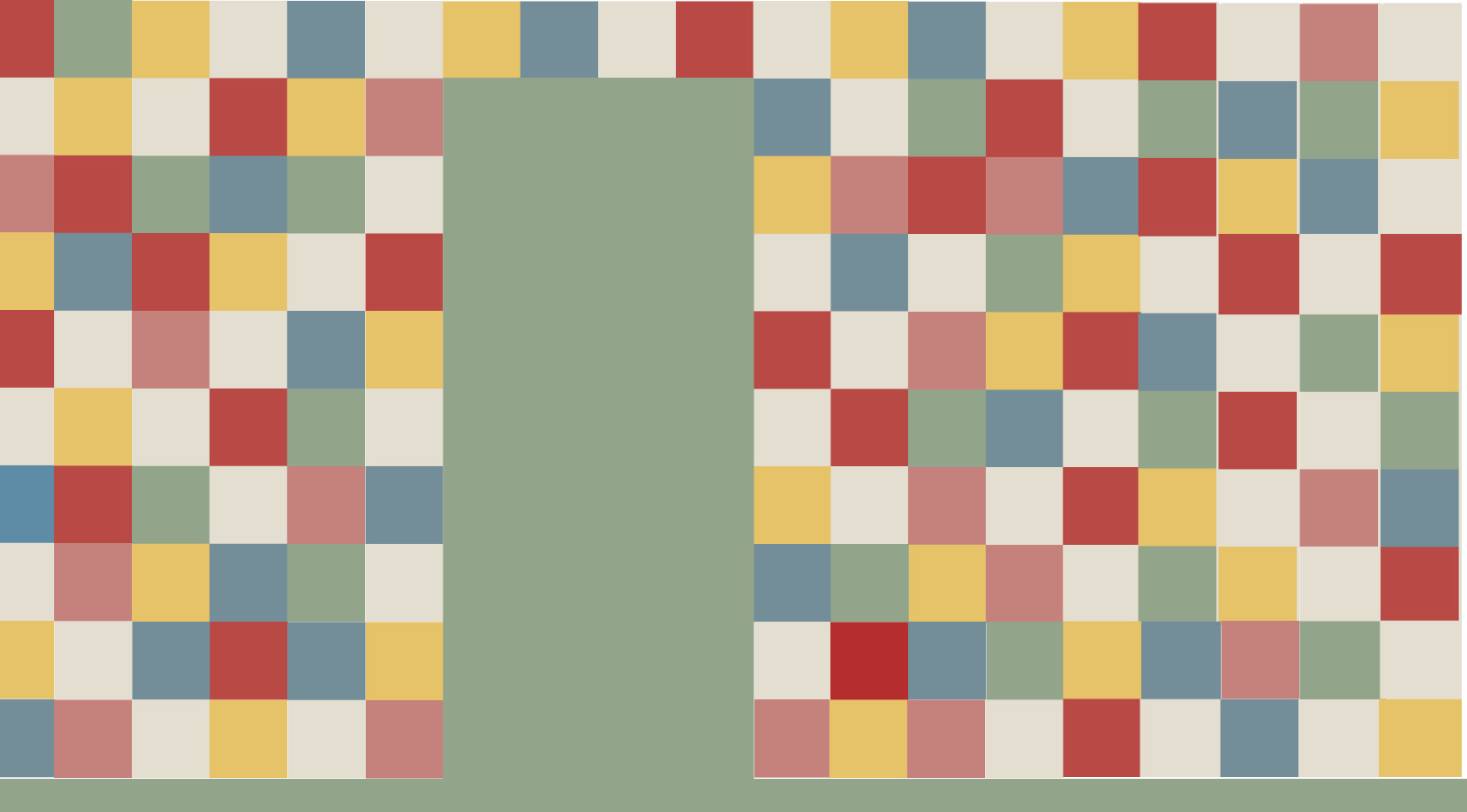
As I mentioned in Step 1, we started our design above the doorway and branched out from there. I wanted to make sure our color placement looked random (not accidentally creating patterns), so I mapped it all out before we started painting.
I used Canva to map out our square colors, but you could also just use a simple sketch to keep things easy.
And of course, you can always just wing it and decide as you go!
Don’t Forget Your Trim Color
I didn’t want any of the squares to run into the same color trim, so I stayed away from green on the bottom row and by the door.
Step 4
Mark Your Lines
Using a laser level, project your horizontal and vertical lines onto the wall. This will give you a temporary guide to work with. At the corner of each square, make a small, light mark with a pencil. This is all the guidance you’ll need. You’ll basically just connect the dots when you start painting.
While you don’t have to use a laser level, it will definitely help you keep your lines straight and even. If you’re not using one, you can use a ruler and pencil to mark off your measurements. At the corner of each square, make a small, light mark with a pencil. This is all the guidance you’ll need.
Step 5
Time To Paint
This is the fun part!
To keep track of everything, I found it helpful to dab a small splotch of each color in its designated square first. This gave me a quick visual to make sure the colors were evenly distributed and I hadn’t accidentally created any unwanted patterns.
Once I had a splotch of every color in place, I went back and painted each square in, one color at a time.
Here’s the thing about freehand painting
Small imperfections add to the unique, hand-drawn look. So don’t let the idea of painting a freehand wall stress you out. This is a very forgiving project!
If you accidentally paint too far outside the lines or go over into another square, you can simply paint over it with the correct color later. Remember, the goal is a perfectly imperfect, hand-drawn look.
You’ve got this!
Don’t forget: Paint your light switch and outlet covers! We used paintable covers to carry the checkerboard pattern across the whole wall.